

Universities, Vocational Training (VT) centers, and technology centers are among the educational institutions addressing both the theoretical and practical study of mobile robotics from a multidisciplinary perspective.
Robotics education is no longer limited strictly to theoretical models or digital simulations; it aims to bring projects into real-world environments. Mobile robots enable students and researchers to validate algorithms, integrate sensors, and develop real applications without having to build a platform from scratch.
Building a mobile robotic platform from the ground up requires months of work dedicated to mechanical, electronic, and software integration. Utilizing an operational platform allows research to focus directly on the core scientific challenge to be solved.
In this article, we share real-world use cases of Robotnik mobile robots currently deployed across universities, research projects, and Vocational Training programs.
Mobile Robotics: A Key Tool for Universities and R&D Centers
Definition and Core Features
An educational mobile robot platform allows students and researchers to test and validate technological developments such as navigation, perception, or manipulation algorithms, on physical hardware.
Unlike closed systems, these mobile bases are characterized by three fundamental pillars:
- Open Software Architecture: A robot running on ROS 2 ensures maximum flexibility and an open architecture that allows educators and researchers to access and modify telemetry or low-level controllers, as well as program custom navigation algorithms.
- Modularity: A modular mobile robotic platform allows hardware components (such as LiDAR sensors, RGB-D cameras, robotic arms, or other specialized modules) to be integrated, replaced, or expanded based on changing project requirements.
- Operational Versatility: Mobile robots capable of operating in both indoor and outdoor environments provide essential versatility for validating kinematics, as well as autonomous navigation in unstructured or irregular terrain.
Real-World Examples in Higher Education and Research
Used as an educational and research resource, a mobile robot platform provides a physical testbed where researchers, educators, and students can develop and validate technologies related to programming, navigation and localization, kinematics, mobile manipulation, and trajectory planning under conditions similar to those found in industrial and scientific applications.
Below are three real-world examples of Robotnik mobile robots deployed in Vocational Training, research centers, and universities:
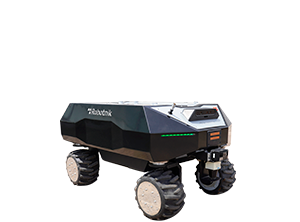
- Robotics for Archaeology: The Italian Institute of Technology (IIT) deployed Robotnik’s RB-SUMMIT mobile platform as an autonomous inspection and maintenance robot in the Pompeii Archaeological Park, improving structural monitoring and data collection on unstructured surfaces.
- Spatial AI for Cooperative Construction Robotics (TUM): This project developed by the Technical University of Munich integrates an RB-VOGUI+ platform to advance toward real-world deployment of collaborative mobile construction robots, leveraging Spatial AI and spatial computing techniques from Computer Vision and Robotics.
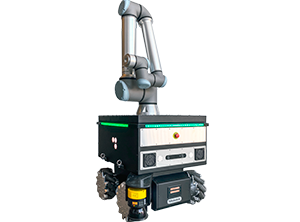
- Vocational Training (VT): In Vocational Education, IES Cotes Baixes utilizes Robotnik’s RB-THERON within its Collaborative Robotics and Smart Manufacturing programs. This platform allows students to apply theoretical concepts of programming, IoT integration, mobile robot navigation, and collaborative operations directly on industrial-grade hardware.

Academic Applications of Mobile Robots and its benefits
In engineering degrees such as Robotics, Electronics, or Mechanical Engineering, mobile robotics is a fundamental tool for learning and research. These platforms bridge the gap between theoretical concepts and real-world implementation.
The following sections detail their primary applications and the core value they bring to academic environments.
Applications and Benefits of Mobile Robots in Universities
Beyond simulated environments, mobile robotic platforms allow students and researchers to tackle the unpredictability of the physical world, testing perception systems, sensor fusion, and real-time control. This direct interaction accelerates hands-on learning and connects academic research with industrial demands.
The table below highlights key applications and benefits of mobile robots in university environments:
| Focus Area | Practical Application | Direct Benefit |
| Autonomous Navigation & SLAM | Implementation and validation of localization, mapping, and path planning algorithms in dynamic environments. | Bridging the Sim-to-Real Gap: Tests software against physical variables such as odometric drift, wheel slippage, and hardware latencies. |
| Perception & Sensor Fusion | Integration of 3D LiDARs, depth cameras, and Inertial Measurement Units (IMUs) for real-time inspection and data processing. | Algorithmic Resilience: Enables evaluation of noise filtering and sensor accuracy under changing lighting, reflective surfaces, and vibrations. |
| Mobile Manipulation | Combining mobile bases with robotic arms for advanced picking tasks and high-precision positioning. | Coordinated Kinematic Control: Facilitates research into stability and complex trajectory planning between the base and the manipulator simultaneously. |
| Software Ecosystem (ROS/ROS 2) | Development on open-source industry-standard middleware and low-level hardware controllers. | Technology Transfer & Interoperability: Simplifies code reuse across research labs and aligns student training with industrial requirements. |
Applications and Benefits of Mobile Robots in Vocational Training
As highlighted in the IES Cotes Baixes case, deploying robotic platforms in technical workshops significantly enhances practical training.
With the deployment of the RB-THERON VT version, Industry 4.0 standards are brought directly into vocational classrooms. Students work with an industrial-grade, ROS 2-native mobile robot platform to build essential competencies in safety, communications, and system maintenance.
The table below outlines the primary educational applications and benefits of the RB-THERON VT version in Vocational Education:
| Focus Area | Practical Application | Direct Benefit |
| Autonomous Navigation & Intralogistics | Configuration of localization algorithms, 360° mapping using Robosense Airy LiDAR, and dynamic obstacle avoidance. | Real Factory Environment: Trains students in internal fleet management and transport routing using real industrial standards. |
| Industrial Communications & IoT | Wireless connectivity practice via industrial routers (Wi-Fi/Bluetooth), Ethernet integration, and I/O bus systems. | Industrial Connectivity: Enables students to interface the robot with PLCs, smart classroom networks, and workshop control systems. |
| Safety Systems & Maintenance | Evaluation of electromechanical braking, emergency stop circuits, and UN38.3 lithium battery monitoring. | Hardware Diagnostics: Provides hands-on experience in preventive maintenance and verification of machinery safety compliance. |
| ROS 2 Ecosystem & Modularity | Node development on ROS 2 architecture and modular extension via cobots, lifting units, or custom payloads. | Industry-Aligned Training: Eliminates recurring software licensing fees via open-source tools while ensuring platform adaptability to evolving coursework. |
Custom Robotic Solutions for R&D Projects
Competitive R&D projects, such as European Horizon Europe framework initiatives or technology center developments, frequently present specific scientific challenges that exceed the capabilities of off-the-shelf robots.
In these scenarios, flexible, customizable robotic solutions are essential for adapting hardware and software architectures to match research goals.
With over two decades of active participation in European R&D initiatives, Robotnik acts as a key technology partner, supplying both standard commercial platforms and custom hardware/software adaptations tailored to project goals.
The table below highlights primary research applications and key benefits of mobile robots in advanced R&D projects:
| Focus Area | Practical Application | Direct Benefit |
| Emergency & Search and Rescue Robotics | Remote operation, 3D mapping, and inspection with advanced sensors in critical infrastructure, tunnels, or disaster zones. | Safety in Hostile Environments: Enables validation of navigation and perception in high-risk scenarios without exposing human personnel to danger. |
| Agricultural Robotics | Mobile platforms and mobile manipulators optimized for agricultural tasks such as crop monitoring, phenotyping, and harvesting. | Operation in Unstructured Terrains: Supports research into biological variation, crop row navigation, and environmental resilience under field conditions. |
| 3D Mapping / Reconnaissance / SLAM | High-definition 3D map construction and real-time pose estimation combining 3D LiDAR sensors and computer vision. | Autonomous Navigation in Complex Environments: Enables precise localization research in GPS-denied environments or dynamic visual conditions. |
| Autonomous Mobile Manipulation | Complex picking, assembly, and continuous physical interaction tasks using integrated mobile bases and robotic arms. | Direct Focus on Scientific Challenges: Eliminates the need for research consortia to build custom mechatronic hardware, allowing immediate focus on task planning and Human-Robot Interaction (HRI). |
How to Choose a Mobile Robot Platform for Universities and Academic Training
To ensure a high return on investment and maximum utility for teaching and research, universities and technology centers should evaluate platforms based on key criteria: software open-source access, safety, and hardware modularity.
Open Software Architecture
Research requirements vary widely across projects. Working with unrestricted platforms that grant full access to software controllers is critical. An open software architecture simplifies implementing custom algorithms, integrating in-house research tools, and adapting the mobile robot platform to diverse research tracks from autonomous navigation to advanced perception.
ROS 2 Compatibility
ROS 2 serves as the primary software environment for modern robotics research. Selecting a natively compatible platform simplifies setup and grants immediate access to widely adopted libraries, tools, and simulation environments.
It also streamlines pre-deployment testing in simulators like Gazebo or Isaac Sim prior to executing code on physical hardware, accelerating thesis projects while training students on the primary software framework used in industry.
Modular Sensor Configuration
Sensor requirements differ significantly between projects. While computer vision research may require depth cameras, other initiatives demand 3D LiDARs, IMUs, or high-precision GNSS systems. A platform designed for modular sensor integration allows a single mobile base to be repurposed across multiple research initiatives without custom electronic redesigns.
Integrated Safety Systems
In educational and research environments where students and staff work alongside hardware, physical safety systems are essential for controlled experimentation. Features such as safety laser scanners, physical and remote emergency stops, and hardware-level velocity limiting minimize operational risks during alpha and beta testing.
Indoor and Outdoor Navigation Capacity
Validating algorithms under real-world operating conditions often requires transitioning beyond laboratory spaces into warehouses, academic campuses, or rugged outdoor terrain.
Mobile Robotic Platforms such as the RB-SUMMIT or RB-VOGUI series provide the cinematic and mechanical capabilities needed to support autonomous navigation, mapping, and inspection research across both indoor and outdoor environments.
Capacity to Integrate Custom Payloads
Modularity is fundamental to robotics R&D. Mobile robots frequently serve as base units carrying specialized payloads: single or dual robotic arms, measurement instrumentation, inspection sensors, scissor lifts, or experimental hardware developed by research teams.
Such as Tecnalia‘s deployment on Robotnik’s RB-ROBOUT base

Providing dedicated mounting space, payload capacity, and standard power/communication interfaces ensures seamless hardware integration and expands the long-term research utility of the mobile robot platform.
