Retail inventory management requires knowing which products are available, in what quantities and where they are located. Sales, returns and movements between the stockroom and sales floor continually change this information, making it difficult for records to reflect the store’s actual inventory.
Mobile robots can automate data collection routes using RFID readers, cameras and specialized software. The information collected helps teams check stock, identify discrepancies and organize replenishment.
At Robotnik, we develop modular platforms for integrators and technology companies to build inventory applications. Robin, developed by Keonn on our RB-THERON platform, demonstrates how autonomous movement can be combined with RFID reading and dedicated inventory software.
Why Mobile Robots Are Entering Retail Operations
Manual inventory checks involve walking through the store, identifying SKUs and comparing quantities. In stores with extensive product ranges, repeating these checks takes up a significant portion of employees’ time.
Mobile robotics allows scheduled routes across the sales floor and stock areas to collect information regularly. Staff can then focus their checks on products or locations where discrepancies have been detected.
Sharing inventory data between the sales floor, stockroom and warehouse helps teams track product availability and movements. Sharing information about quantities and movements helps teams understand whether products are available for sale, held in the stockroom or require further checks. This complements automated warehouse inventory management, while addressing the specific needs of the store.
How Mobile Robots Turn Shelf Data into Inventory Decisions
Autonomous Inventory Scanning
An inventory application combines platform navigation with the devices needed to identify products. The robot travels through defined areas while the system records readings and associates them with the retailer’s SKUs.
Routes can follow daily, overnight or other scheduled inventory routines. Planning must account for store activity, accessible areas and staff tasks to minimize disruption.
Automation makes the process repeatable without requiring a full manual count on every round. Detected discrepancies still require an operational response, such as checking a location, correcting a record or finding a product.
Shelf Analysis and Stockout Detection
The required technology depends on what needs to be checked. RFID product identification and visual shelf analysis are different applications.
An RFID system reads tags associated with products. A computer vision application can analyze shelf images to detect gaps, misplaced products or deviations from the planogram, which defines the intended product layout.
Price verification requires recognizing visible information and comparing it with pricing records. These functions need cameras, software and development tailored to the environment and products.
Adding a mobile base therefore does not automatically provide empty-shelf detection, price checking or misplaced-product identification. These capabilities depend on the modules integrated into the final application.
Smart Replenishment and Product Availability
Readings allow recorded inventory to be compared with detected products. If an SKU is listed as available but is not detected in its expected location, staff can investigate whether it remains in the stockroom, has been moved or reflects a recording discrepancy.
A product may be available in the stockroom while missing from the sales floor. Linking readings to recorded locations helps teams distinguish a replenishment need from a lack of inventory.
Integration with inventory and replenishment systems allows alerts and task lists to be generated. Teams can prioritize shelves according to product availability and store criteria.
The robot supplies data that helps trigger these tasks. Physical replenishment is a separate operation, performed by staff or by a manipulation application developed for that purpose.
Technologies That Make Retail Mobile Robots Useful
Technology selection starts with the products to be identified and the information the retailer needs:
- RFID and barcode scanning: RFID identifies tagged products using radio waves without requiring each tag to be scanned visually. Barcode readers require visible, legible codes. Reading coverage depends on the devices, product labeling and operating conditions.
- Computer vision: Cameras and image-processing software, including AI models where appropriate, can identify shelf gaps, misplaced products and planogram deviations. Each function must be developed and validated for the application.
- LiDAR and SLAM: Support robot localization and navigation through mapped spaces. Autonomous navigation allows the platform to respond to detected obstacles, subject to available space and configured limits.
- System integration: Connections with WMS, ERP, inventory platforms or replenishment tools transfer results to the systems used by store teams.
On compatible platforms, ROS 2 supports communication between components and the development of application-specific functions.
Collaborative platforms can share spaces with people using their detection and protection systems. Deployment must consider routes, robot dimensions and the safety of the complete application.

Benefits of Using Mobile Robots in Retail
More Accurate Inventory Data
Scheduled rounds allow data to be collected more frequently and through a consistent procedure. This makes it easier to detect discrepancies and check whether an issue persists between rounds.
Accuracy depends on reading coverage and the correct association of identifiers, SKUs and locations. Teams also need to know when data was collected and which areas were checked to interpret the results.
This information helps retailers target checks and reduce differences between recorded inventory and detected stock.
Improved Operational Efficiency and Customer Experience
Automating part of the counting process reduces repetitive manual tasks, allowing staff to spend more time on customer service, replenishment and resolving issues.
Checks can focus on locations flagged by the system, rather than inspecting every shelf equally often. More reliable inventory information also helps staff locate products and answer availability questions.
When teams act on the findings, better stock visibility supports replenishment and helps keep products available to shoppers.
Robotnik Mobile Robots for Smarter Inventory Automation

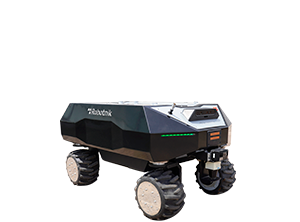
RB-THERON is a modular indoor platform that can integrate readers, cameras and other devices for retail applications. Robotnik provides the mobile base, control and navigation capabilities, while specialized third-party technology completes the inventory application.
Robin, developed by Keonn on RB-THERON, shows how these functions come together. Robotnik’s platform provides autonomous movement, while Keonn integrates RFID reading technology and dedicated inventory software. This is an example of application development on a modular Robotnik platform.
During a route, the RFID system identifies tagged products and collects readings for the inventory application to process. Autonomous movement removes the need for an employee to walk through the space with a handheld reader on every round.
The platform’s modular design allows readers, cameras and other devices to be configured for the application. The open architecture connects the specialized application with Robotnik’s control and navigation software.
Robin’s application is RFID inventory scanning. Visual shelf analysis and price verification require separate modules.
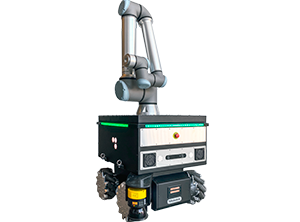
For projects involving manipulation, RB-KAIROS+ supports the development of pick-and-place operations. Retail applications require the products, gripping method and working locations to be defined; it is not a standard shelf-replenishment solution.

Conclusion: Mobile Robots as a Key Driver of Retail Efficiency
Mobile robots make inventory data collection repeatable and help teams focus checks and replenishment tasks where they are needed. The final capabilities depend on the reading devices, software and integrations developed for each application.
Robin illustrates this approach: Robotnik provides mobility, while Keonn integrates RFID reading and inventory software. Together, these technologies support inventory automation in retail.