

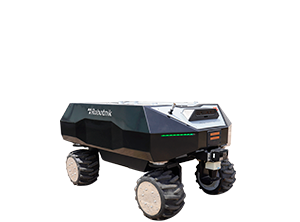
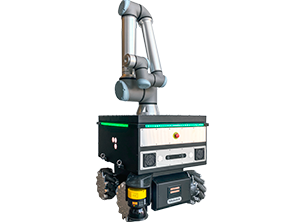
Roberto Guzmán, CEO of Robotnik, reflects in the “España Deep Tech” column of El Español on one of today’s most pressing challenges: ensuring the stable, safe, and efficient operation of critical infrastructures, ranging from energy and transportation to water supply and industry.
Autonomous mobile robotics and various Artificial Intelligence models now provide essential tools to improve inspection and maintenance in critical environments, such as electrical substations or train catenaries, where any failure can have significant economic and social consequences.
The article highlights how collaboration between technology companies, governments, and public institutions is key to advancing inspection robotics—an area that represents a strategic priority for Spain.
FULL ARTICLE
February 2026 | España Deep Tech
In a context of reindustrialization, energy transition, and increasing technological dependence, some decisions have shifted from being purely technical to becoming strategic. The ability to control, supervise, and maintain critical infrastructures like energy, transportation, water, or industry, is one such decision. The operational resilience of essential systems is a key matter of public interest, and any failure can have both economic and social repercussions.
Artificial Intelligence and Autonomous Robotics to improve inspection tasks
In this scenario, the convergence of Artificial Intelligence and autonomous systems is redefining how these environments are managed. Inspection robotics is one of the areas where this change is most evident, anticipating many of the industrial, economic, and strategic challenges that Spain and Europe will face in the coming years.
The recent growth of the sector has been remarkable. According to the International Federation of Robotics (IFR), in 2024 the number of units sold for inspection and maintenance robotics increased by +2476% compared to the previous year. Beyond the numbers, what matters is what this represents: the transition from highly manual supervision models to increasingly autonomous systems capable of operating continuously in complex and critical environments.
Smarter Robots: The Evolution of Inspection Robotics
This change is not incremental but structural. For years, inspection robotics relied on highly specialized platforms programmed to perform very specific tasks under controlled conditions. Today, the integration of advanced deep learning techniques is giving rise to systems capable of understanding their environment, adapting to unforeseen situations, and making informed decisions in real time. Technologies such as Embodied
Intelligence, Vision-Language-Action (VLA) models, and agentic AI are radically expanding the scope of service robotics.
Inspection robotics is a prime example of this evolution. Traditionally, these systems relied on sensors and algorithms designed to detect specific events: a crack, a leak, or a thermal anomaly. Today, robots not only detect defects but also interpret the context in which they occur. They identify objects, understand spatial relationships, combine visual, thermal, or acoustic information, and distinguish between normal and abnormal behaviors.
This shift from detection to understanding has profound implications. It reduces false positives, improves data quality, and prioritizes risks automatically, optimizing decision-making in environments where response time is critical. Added to this is the advancement of semantic mapping, which generates representations of the environment that include meaning: what each object is, its function, and how it should be inspected. Comparing these maps across different inspection rounds allows for the detection of relevant changes without explicit searches, increasing operational efficiency and coverage.

Agentic Artificial Intelligence: A Paradigm Shift
Building on this technological foundation, even more transformative architectures are emerging. Vision-Language-Action models translate human instructions expressed in natural language into physical actions for robots, radically simplifying interaction and reducing the need for complex interfaces or explicit programming. In parallel, agentic AI introduces a new paradigm: systems capable of pursuing high-level goals, planning complete missions, evaluating outcomes, and autonomously adapting their behavior.
In practice, this means moving from robots executing predefined rounds to platforms that can receive general orders—for example, “inspect the infrastructure and report critical risks”—and autonomously decide where to act, which sensors to use, and how to generate relevant reports. The potential impact is significant: reduced operational costs, improved safety, broader inspection coverage, and scalability previously difficult to achieve.

Critical Infrastructures in Spain: A Strategic Priority
Spain has strong technical capabilities in robotics, automation, and applied Artificial Intelligence, as well as an industrial ecosystem that can greatly benefit from these solutions. However, large-scale adoption still faces structural barriers: market fragmentation, risk aversion in critical environments, lack of common standards, and a persistent gap between technological development and industrial deployment.
From an international perspective, the contrast is clear. Countries such as China have made robotics and AI central pillars of their industrial policy, combining public investment, manufacturing capacity, and long-term scaling strategies. Europe mainly advances through R&D programs that foster innovation but faces greater challenges in turning that innovation into competitive industrial deployment. In this context, dependence on technologies developed outside Europe for operating critical infrastructures raises important questions regarding resilience, control, and strategic autonomy.
The challenge for Spain and Europe is not limited to developing more sophisticated algorithms, as technological capabilities are already available. The main issue is strategic, relating to how autonomous robotics is approached, including medium- and long-term investment policies, incentives for adoption in sensitive sectors, and conditions for industrial scaling.
Inspection robotics is an active part of this challenge. What is being tested today in pilot projects will soon become an essential layer for the proper functioning of critical infrastructures. In this context, it is important to consider not only the deployment of these technologies but also the environments in which they are developed and the governance frameworks under which they operate. These decisions will shape Spain’s and Europe’s position in the evolution of industrial automation.
Roberto Guzmán, CEO and Founder of Robotnik Automation
Preguntas frecuentes sobre sobre IA aplicada a la róbotica de inspección
La IA del RB-WATCHER se aplica principalmente en el procesamiento de imágenes captadas por cámaras RGB, térmicas y 3D. Gracias a algoritmos de aprendizaje profundo, el robot puede reconocer objetos, personas y anomalías, tomar decisiones automáticas y mejorar continuamente su precisión mediante el entrenamiento con grandes volúmenes de datos reales.
Los principales beneficios de la IA en robótica de inspección son el incremento de autonomía operativa, la optimización de recursos y reducción de tareas repetitivas, la evolución continua gracias al aprendizaje automático y una mayor interoperabilidad con otros sistemas y plataformas.
El RB-WATCHER se utiliza para detectar sobrecalentamientos en equipos eléctricos, identificar presencia no autorizada, controlar fugas o goteos, supervisar vallados o estructuras dañadas y verificar el uso de equipos de protección en áreas de riesgo.

- Autonomous Robotics as a Strategic Infrastructure: The Challenge of Inspecting and Protecting Critical Systems - 10 February 2026
- Industrial robotics in 2025: trends, figures, and global outlook - 15 December 2025
- Artificial Intelligence for vision-based autonomous inspection - 27 November 2025