

Robotics is a constantly evolving sector. This article analyzes industrial robotics in 2025, highlighting global trends by application and region, supported by the latest data from the World Robotics 2025 – Industrial Robots report published by the IFR. It also explains how Robotnik’s solutions enable companies to capitalize on these trends to optimize their processes and stay ahead of the curve.
Historically, industrial robotics was almost exclusively focused on specialized robots designed for specific tasks within manufacturing. Today, many service robots are also considered highly relevant in industrial environments.
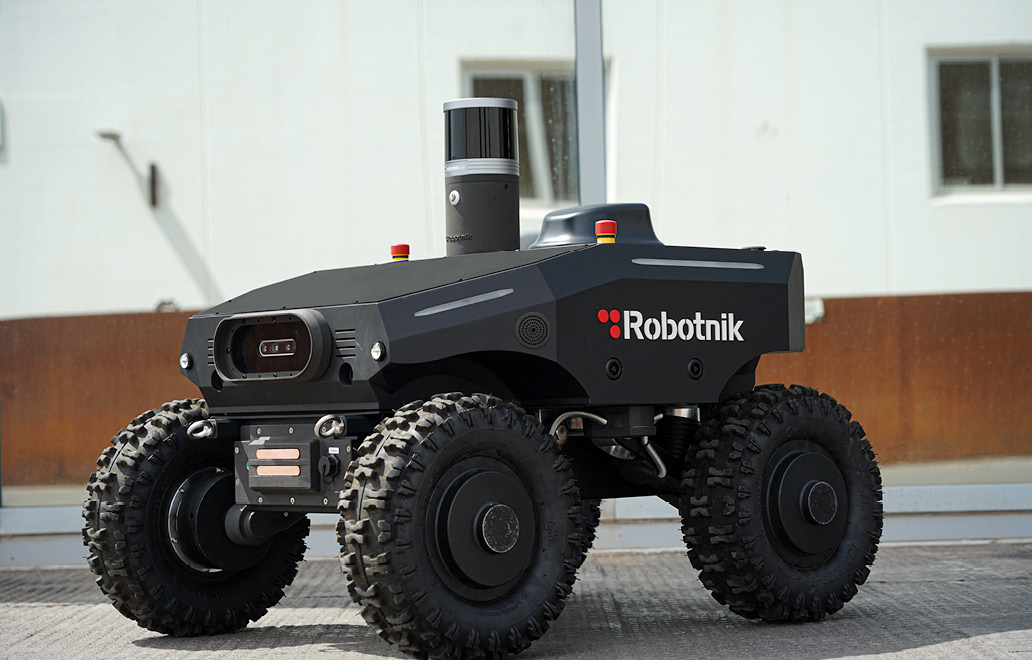
One example is multipurpose robots, which provide competitive value by automating sectors such as aerospace, automotive, manufacturing, and agriculture. Equipped with advanced artificial intelligence, collaborative capabilities, and modular design, these robots are transforming production processes and establishing new foundations to improve productivity, flexibility, and precision across multiple industries.
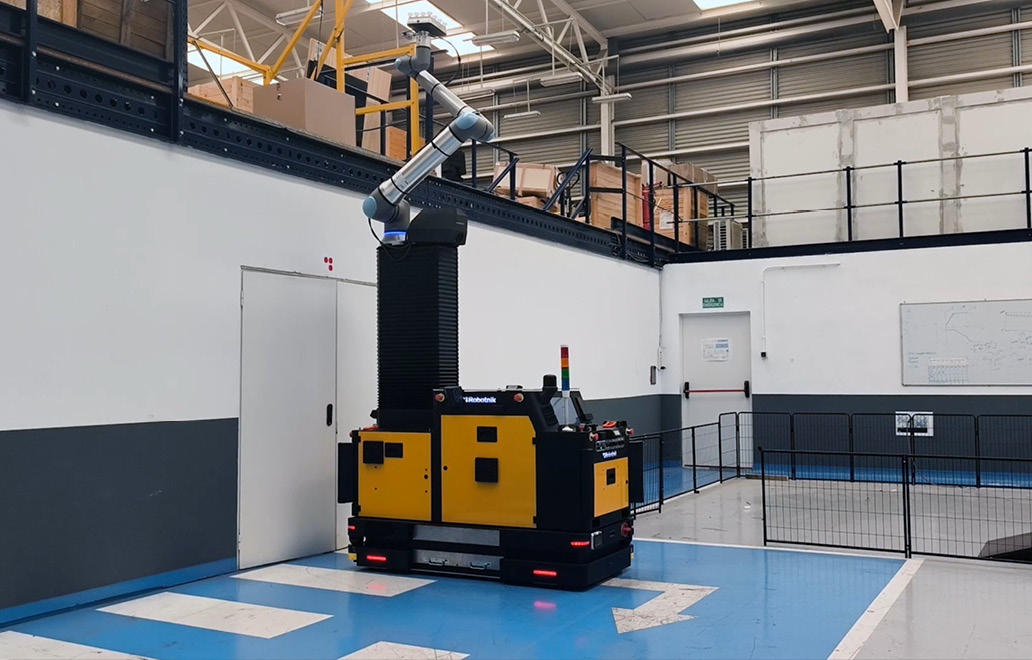
Robotnik has been part of this transformation for years, thanks to its portfolio of Autonomous Mobile Robots (AMRs) and Mobile Manipulators capable of integrating into complex industrial environments, from internal logistics to assembly lines and critical infrastructures.
Global overview of industrial robot installations
According to IFR figures, factories worldwide installed 542,076 industrial robots in 2024, a historic level that confirms the strength of global automation growth. This figure not only represents the second-highest annual volume on record, but also more than doubles installations from ten years ago, when volumes barely reached half of today’s level.
The global operational stock of industrial robots reached approximately 4.66 million units, with year-on-year growth close to 9%, consolidating robots as strategic tools for productivity, efficiency, and competitiveness in modern factories.
In this context, Robotnik has expanded its international presence, supplying autonomous mobile robots to markets where it previously had no users. These robots have been integrated into production lines and warehouses to automate transport and handling tasks, optimizing logistics flows and reducing internal transport times by up to 30%.
Distribution of robotics by region
From a territorial perspective, the adoption of industrial robots shows an uneven global pattern, with a clear upward trend in Asia. Below is an overview based on data from the aforementioned report, highlighting growth across different markets:
Industrial robotics in China
China remains the world’s largest market, accounting for around 54% of new installations in 2024. With approximately 295,000 robots installed, the country reached its highest annual figure, with an operational stock exceeding 2 million units. This growth is driven by strong investment in automation across sectors such as electronics, machinery, and consumer goods, as well as the rise of local manufacturers competing with international suppliers.
Industrial robotics in Japan and South Korea
Japan remains the second-largest global market, with nearly 44,500 robots installed, while South Korea continues to be a strategic market with around 30,000 units installed annually. Although Japan shows slight deceleration, both countries lead innovation and the adoption of advanced robotic solutions in Asia.
Industrial robotics in Europe
Europe accounted for approximately 16% of global installations, with 85,000 new robots installed in 2024. However, the trend was heterogeneous: Germany and Italy recorded contractions in new installations, while Spain stood out, surpassing France and consolidating its position as the third most relevant European market.
The Americas: moderate slowdown
In the Americas, 50,077 robots were installed in 2024, with the United States leading the region. Although volumes are lower than in Asia or Europe, the region maintains stable growth, driven by specific industries seeking automation to increase efficiency and quality.
Which industrial sectors are leading robotic automation?
Traditionally, the automotive industry has been a pioneer in adopting robots to automate its processes. However, in recent years, the electrical and electronics products sector has taken the lead:
-
- Robotics in the electronics industry: 128,899 units installed, making it the most robotized sector worldwide in 2024.
- Robotics in the automotive industry: continues to maintain high levels of robot installations but shows a slight decline in new deployments.
- Robotics in the metal industry: experiencing significant and sustained growth, representing a crucial niche for robotic solutions. Robotnik has observed this strong momentum in the metal industry through the implementation of robots such as the RB-ROBOUT+ and RB-KAIROS+.
This evolution reflects the diversification of demand and how industrial robotics is becoming firmly established in high-tech sectors and advanced manufacturing.
Key trends in industrial robotics for 2026
Industrial robotics continues to consolidate its role as a driver of productivity and competitiveness across different industrial sectors. Its sustained growth and the adoption of advanced technologies are transforming production processes, and companies like Robotnik help ensure that this transition is efficient and tangible in real-world environments—not only for large enterprises but also for SMEs.
All reports point to several trends that will shape the evolution of industrial robotization in 2026:
-
- Sustained growth: Industrial robot installations have doubled over the past decade, demonstrating that automation is resilient even amid economic fluctuations.
- Collaborative robots and Artificial Intelligence: Cobots and AI systems enable safe collaboration with human operators, autonomously optimizing processes and expanding applications beyond repetitive tasks to more complex operations.
- Smart and connected factories: Robots no longer operate in isolation; they are integrated into digital environments where real-time management and data analysis enable more flexible and efficient production.
- Regional differences: Asia maintains a robust pace of adoption, while Europe and the Americas show more moderate growth due to socioeconomic and investment factors.
In summary, the robotics sector in 2025 presents a landscape that confirms sustained growth in installations, with record figures worldwide. Asian markets, led by China, are consolidating their leadership, alongside a sectoral shift driven by electronics and electrical products.
The integration of collaborative robots, artificial intelligence, and smart factories points to a future in which automation is not only more efficient, but also more flexible and collaborative. In this context, advanced automation is becoming the key pathway to meeting growing demand, improving productivity, and ensuring quality in global manufacturing.
Preguntas frecuentes sobre sobre IA aplicada a la róbotica de inspección
La IA del RB-WATCHER se aplica principalmente en el procesamiento de imágenes captadas por cámaras RGB, térmicas y 3D. Gracias a algoritmos de aprendizaje profundo, el robot puede reconocer objetos, personas y anomalías, tomar decisiones automáticas y mejorar continuamente su precisión mediante el entrenamiento con grandes volúmenes de datos reales.
Los principales beneficios de la IA en robótica de inspección son el incremento de autonomía operativa, la optimización de recursos y reducción de tareas repetitivas, la evolución continua gracias al aprendizaje automático y una mayor interoperabilidad con otros sistemas y plataformas.
El RB-WATCHER se utiliza para detectar sobrecalentamientos en equipos eléctricos, identificar presencia no autorizada, controlar fugas o goteos, supervisar vallados o estructuras dañadas y verificar el uso de equipos de protección en áreas de riesgo.


- Autonomous Robotics as a Strategic Infrastructure: The Challenge of Inspecting and Protecting Critical Systems - 10 February 2026
- Industrial robotics in 2025: trends, figures, and global outlook - 15 December 2025
- Artificial Intelligence for vision-based autonomous inspection - 27 November 2025