

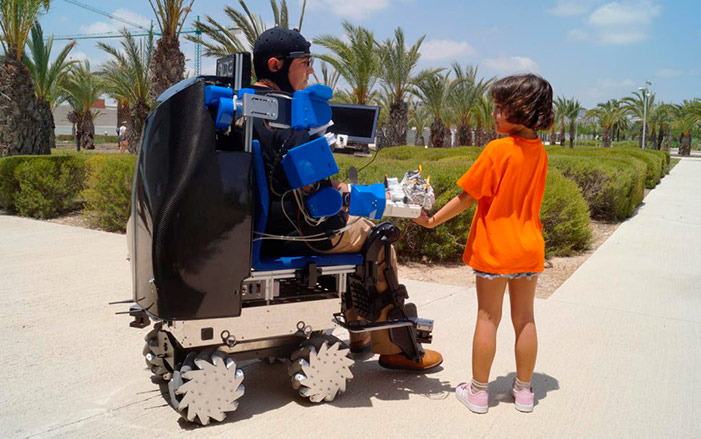
Robohub notes to the results of the project AIDE, which develops an automated wheelchair with an exoskeleton robotic arm for use in the home. The idea is that the next-generation of wheelchairs could incorporate brain-controlled robotic arms and rentable add-on motors in order to help people with disabilities more easily carry out daily tasks or get around a city. The automated wheelchair uses artificial intelligence to extract relevant information from the user, such as their behaviour, intentions and emotional state, and also analyses its environmental surroundings.
Read the full article here .

Latest posts by Robotnik (see all)
- Autonomous Robotics as a Strategic Infrastructure: The Challenge of Inspecting and Protecting Critical Systems - 10 February 2026
- Industrial robotics in 2025: trends, figures, and global outlook - 15 December 2025
- Artificial Intelligence for vision-based autonomous inspection - 27 November 2025